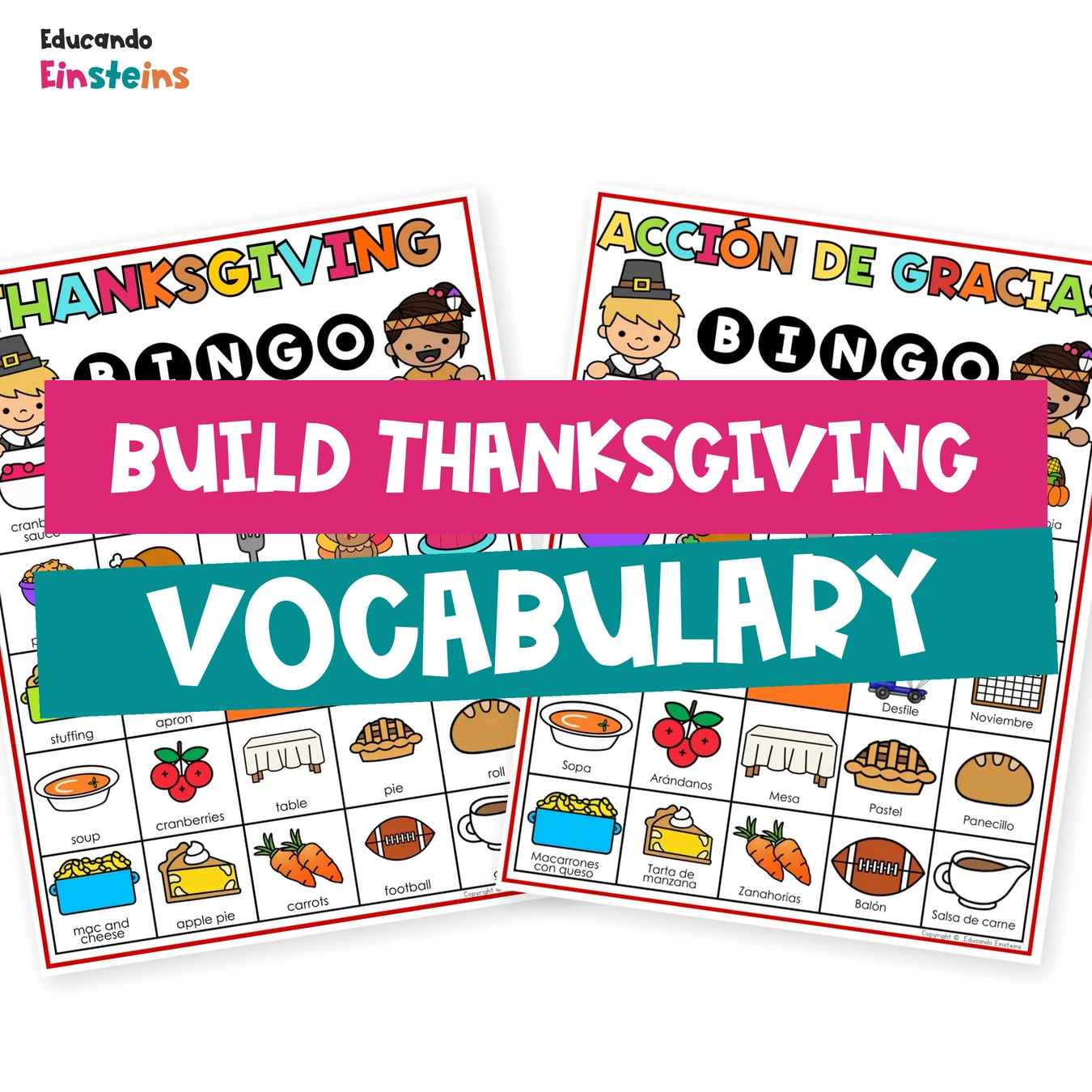
Before you start: make the words familiar
Choose the English or Spanish version to match your lesson. Before handing out the boards, show a few illustrated calling cards. Say each word, invite children to repeat it and check what it means. Spend a little longer on words that are new to your group.
Give each child a printed board and markers. Agree on a winning pattern, such as a row, and explain how you will check it. You can use the color pages or the black-and-white option. Start with a short round and adjust the pace to your learners.
1. See it, hear it, find it
Begin with the most supported version: show a picture, say the word and give everyone time to find it. This makes the connection between the spoken word, the written label and the image explicit.
For children who are meeting the vocabulary for the first time, keep the picture visible while they look. If a child needs help, repeat the word and point to the calling card. The aim of this first round is to get familiar with the words before adding more demanding listening.
2. Listen to the riddle before seeing the answer
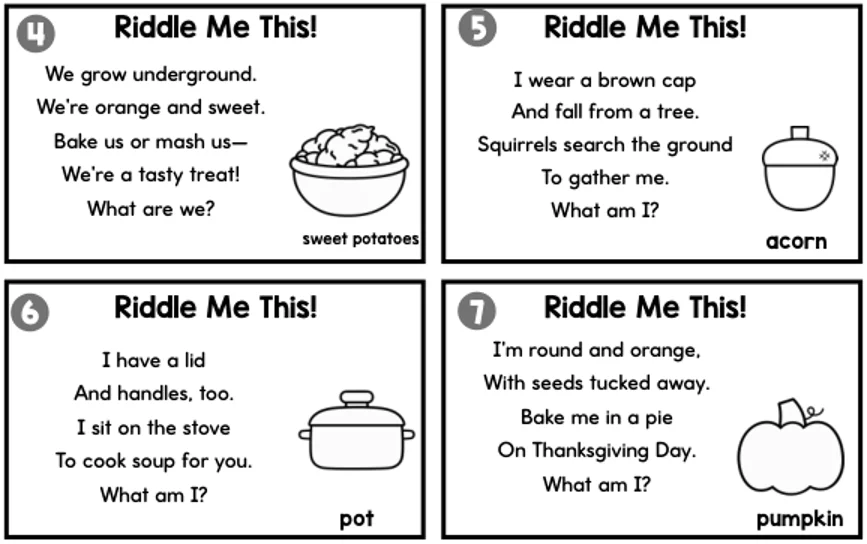
Once the vocabulary is familiar, use the rhyming riddle cards. Read a clue aloud without showing its picture straight away. Give children a moment to think, then invite them to explain which detail helped them decide.
Try this teacher prompt: “I think it is ___ because ___.” This sentence frame is a teaching suggestion for the activity. Model an answer first if your group needs it, and accept a word, a gesture or a short phrase before expecting a full explanation.
Reveal the image after the discussion and let children check their choice. You can repeat a clue, read it in shorter chunks or show the picture sooner. Keep the challenge in understanding the clue rather than racing to cover a square.
3. Project the caller and keep the boards on paper
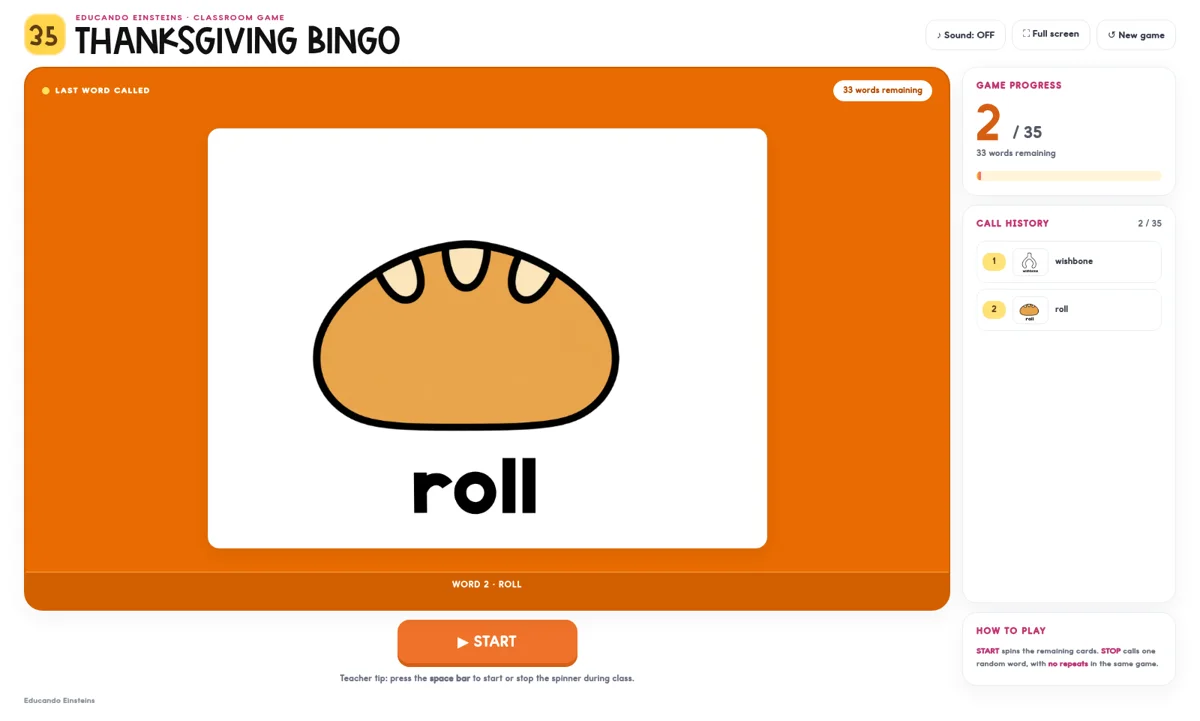
For a whole-class game, use the included digital caller on your computer and project it. It draws vocabulary items without repeating them within the game. Children continue playing with their printed boards and markers; they do not need individual devices.
Download and unzip the resource, then open the included HTML caller in a browser on your computer. It can run offline. Check the display before the lesson so you are ready to pause, repeat a word or give children more thinking time.
Using the game in English and Spanish
Use one language for a round so that students know what they are listening for. In a later round, revisit the vocabulary with the other language version. Pause on a few familiar pictures and ask children which words they remember; they do not need to translate every item at speed.
The resource is available as separate English and Spanish games. Choose the version that matches your teaching language, then vary the support: visible pictures, repeated words or clues before the answer. The game stays familiar while the listening task changes.
Finish with one word and one clue
Before putting the boards away, ask children to choose one picture and say its name. Those who are ready can add a clue for a partner to solve. Listen to their answers to decide which words to revisit next time.
You can use a short round as a vocabulary review, a small-group activity or a seasonal listening lesson. Choose one clear purpose for that round and leave enough time for children to explain their thinking.
A few practical questions
Do students need their own devices?
No. Students use printed bingo boards. For the digital option, the teacher runs the caller on a computer and projects the picture and word.
Can I print in black and white?
Yes. Both games include color and black-and-white printable pages.
Are English and Spanish the same download?
The links below lead to separate English and Spanish products. Each version includes its own materials and digital caller.
Looking for more classroom resources? Explore the collection →