Reading & sequencing
Teaching Sequencing Beyond First, Next and Last
Share this ideaSave on Pinterest
A child can use first, next and last and still need help explaining why one event belongs before another. If a sequencing activity ends as soon as the pictures are numbered, you may miss the most useful part: hearing the reasoning. Try this progression with the Educando Einsteins sequencing resources, choosing one stage at a time.
Looking for the original material?
View the resource on TpTBegin with what the pictures tell you
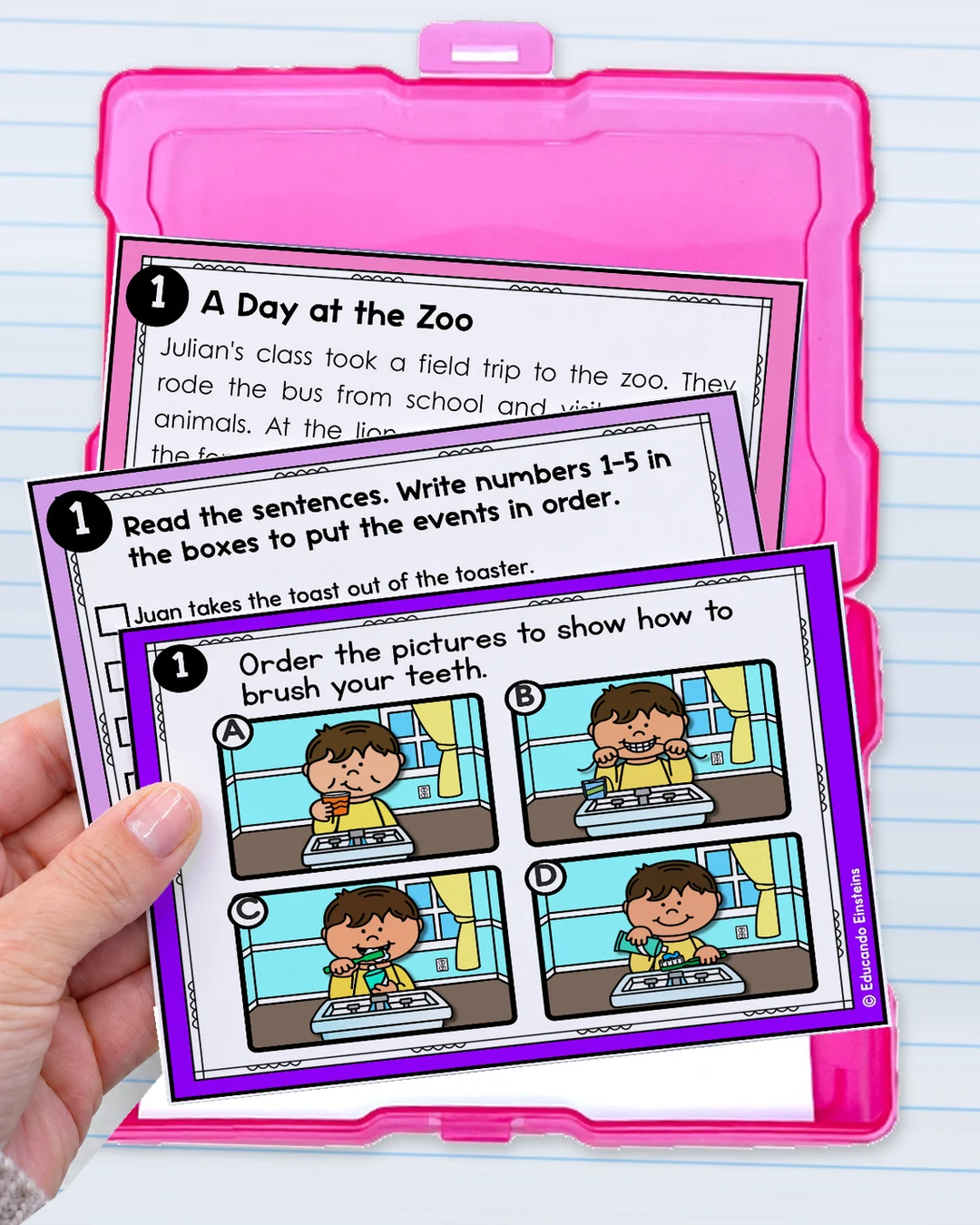
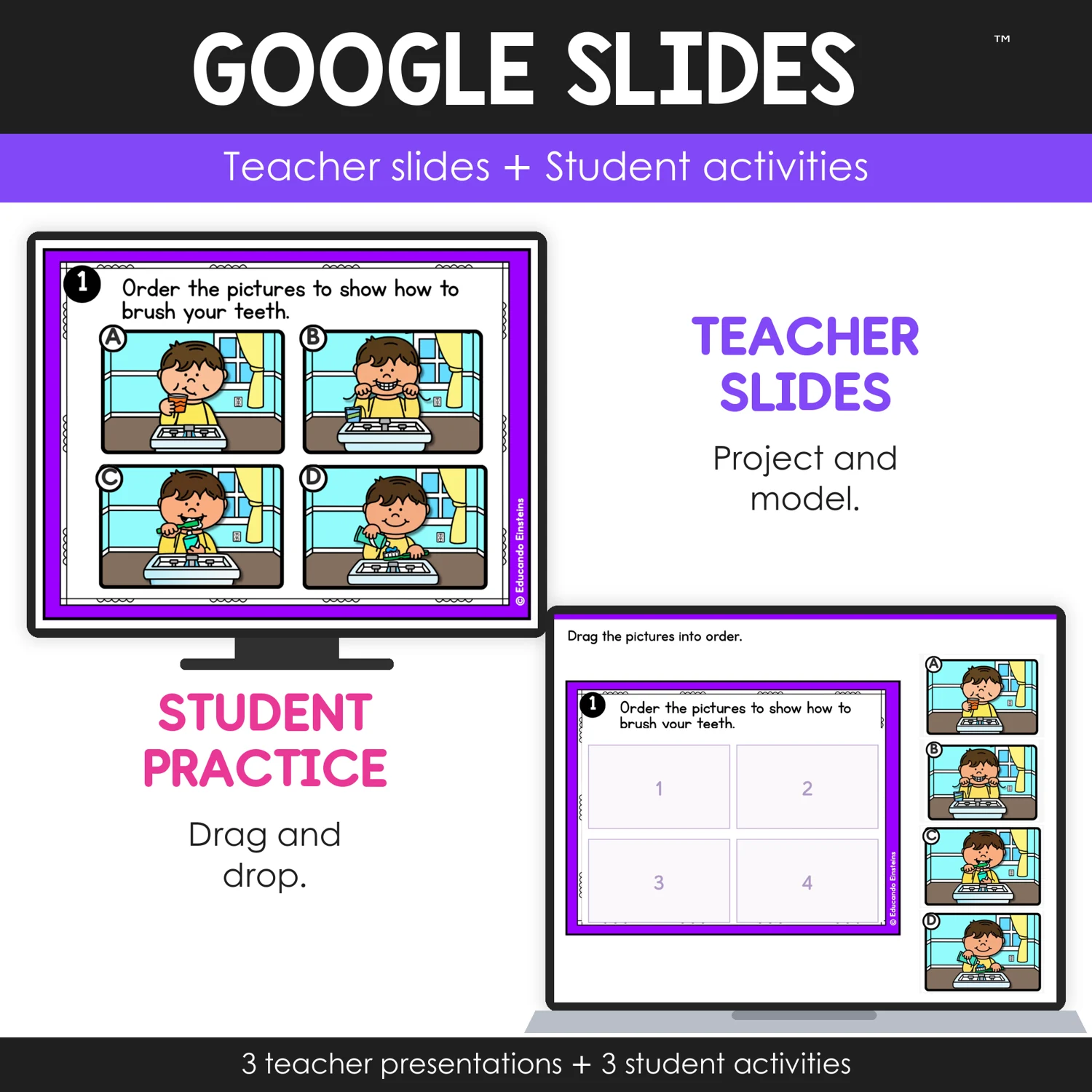
Choose one picture sequence and give students time to look before asking for an order. Invite them to name the action in each scene. This separates understanding the pictures from deciding where each belongs.
Model one decision aloud, pointing to the visual detail that supports it. Then let a partner explain the next choice. Keep the focus on the connection between events rather than on finishing every card.
Ask for a reason before checking
After students propose an order, ask what would stop making sense if two events changed places. Let them revisit the images and adjust their answer. An explanation can be a gesture, a few words or a full sentence, depending on the support needed.
Avoid asking only whether the sequence is correct. Listen for which detail the student noticed. Use that information to decide whether to repeat a visual task or move to a text-based one.
Move from pictures to sentences
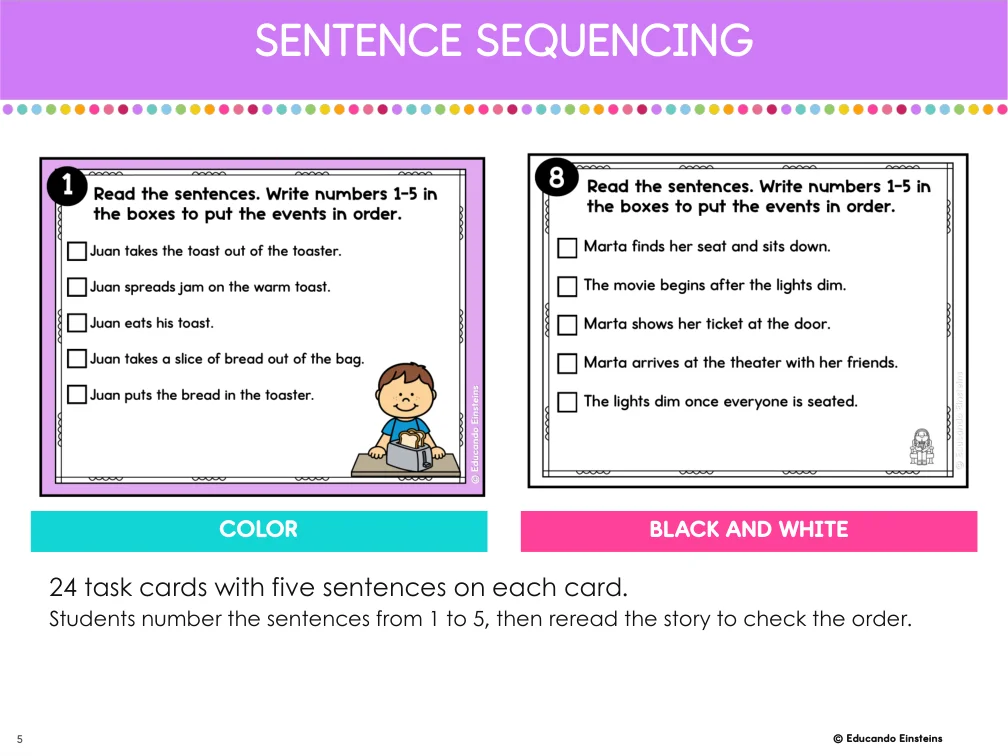
Choose sentence-ordering cards when students are ready to track events in written language. Read the sentences first, check unfamiliar vocabulary and then work on the order. You can model the reading while students focus on the sequence.
After ordering, reread the whole text. Ask students to identify a sentence that helped them decide. Keep the picture tasks available for another group or for a learner who needs to revisit the same skill with less reading demand.
Use the sequence to plan writing
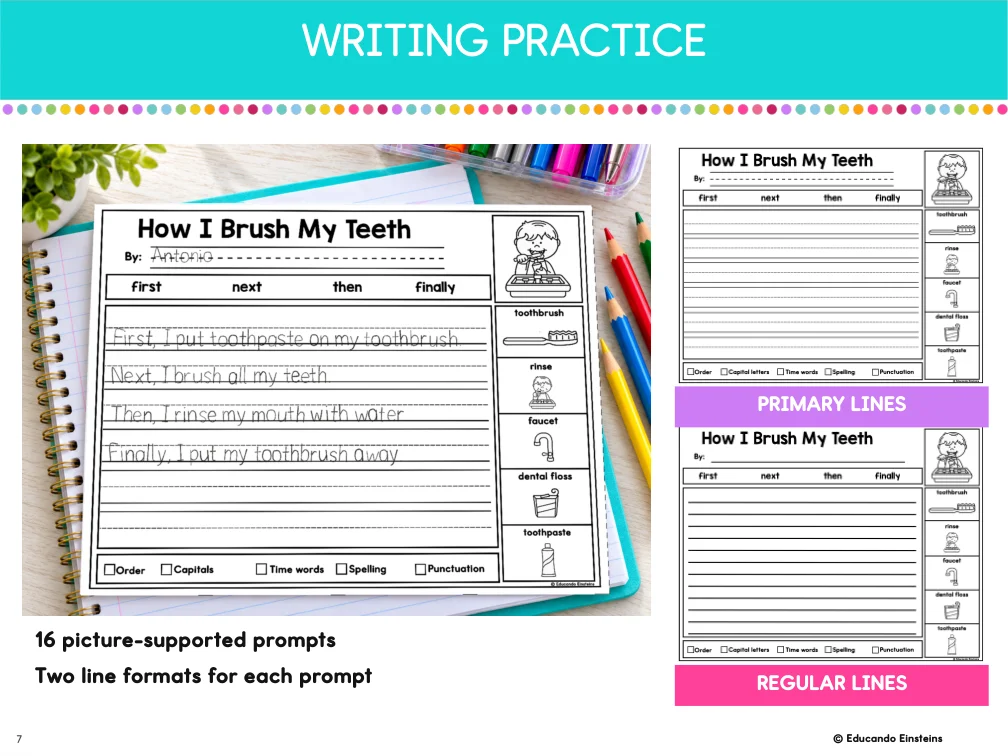
Before a written response, invite students to retell the sequence aloud. Choose a picture-supported writing page and a line format that suits the learner. Rehearsal gives you a chance to hear a missing event before the student commits the story to paper.
For a manageable session, select one sequence and one goal: order the events, justify a decision or write a connected retelling. The original collection includes picture cards, sentence tasks, short stories, writing pages and Google Slides; you do not need to use them all in one lesson.
Teaching suggestions with original Educando Einsteins photographs and resource previews.