Biographies
A Biography Lesson That Goes Beyond Copying Facts
Share this ideaSave on Pinterest
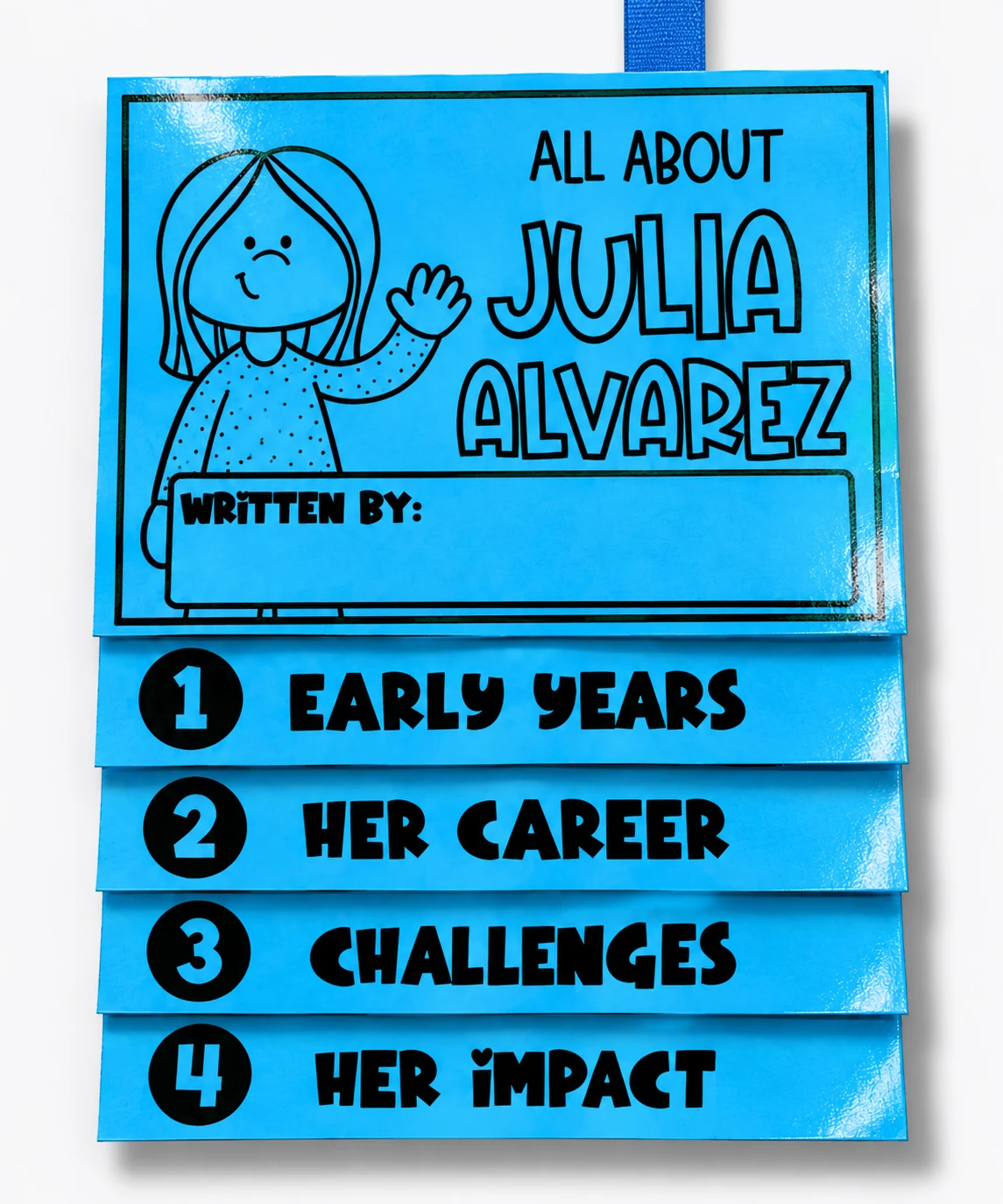
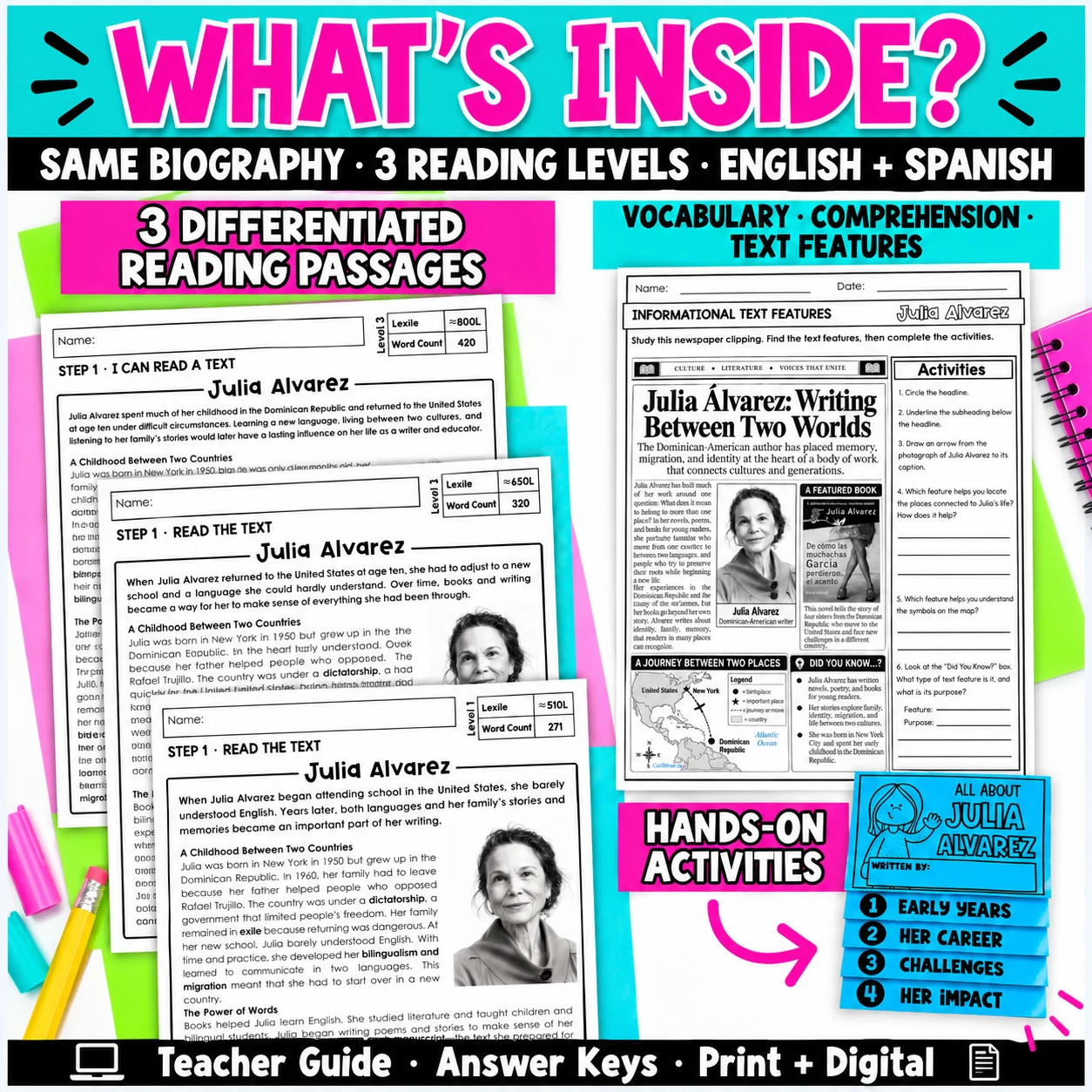
A finished biography booklet can look lovely without showing what a child understood. Begin with a reading question, then ask students to choose information that answers it. The Julia Álvarez bilingual unit brings together leveled passages and hands-on activities, so the making can have a clear reading purpose.
Looking for the original material?
View the resource on TpTKeep the person shared; adjust the support
Choose a passage that suits each reader’s needs while keeping the same biography topic. Introduce a small amount of vocabulary before reading, then return to those words in context. Let students underline or point to a useful sentence before explaining it aloud.
The unit includes English and Spanish and three teacher-estimated reading levels. Use your knowledge of the class to choose the text. These levels are planning supports, not official Lexile measures.
Ask students to select information
Before starting a timeline or mini album, decide what students should explain. Ask them to identify a fact in the passage and tell you why it belongs in that part of the biography. A brief oral explanation is useful before copying anything.
Keep the passage available during the hands-on activity. Encourage children to check details rather than rely on memory. If several facts seem equally important, discuss which one best answers the reading question you chose.
Give the mini album a reading purpose
Use the original mini album to organize selected information about Julia Álvarez. Ask students to rehearse what they want to say before writing. They can return to the passage, revise a choice and explain the connection to a partner.
Choose one activity for the session rather than asking everyone to complete every component. The collection also includes comprehension, vocabulary, a timeline and other biography activities, giving you options for extending the same topic over time.
Close by returning to the text
Invite a student to share one part of the mini album and show the sentence that supports it. Ask what the student learned about the person, rather than only whether the booklet is finished.
For a bilingual group, keep the discussion goal consistent while choosing the language and text support intentionally. Having both language versions lets you plan that choice; it does not require students to translate every sentence.
Teaching suggestions with original Educando Einsteins photographs and resource previews.